“Pattin’ Juba & the Micro:bit: The Importance of Culture in AI,” by Dr. Nettrice Gaskins, posted July 23, 2026. Please click THIS LINK to read the full piece on Medium. See the course materials Gaskins describes below, linked HERE.
Many thanks to Nettrice for inviting us to share this piece on our blog!
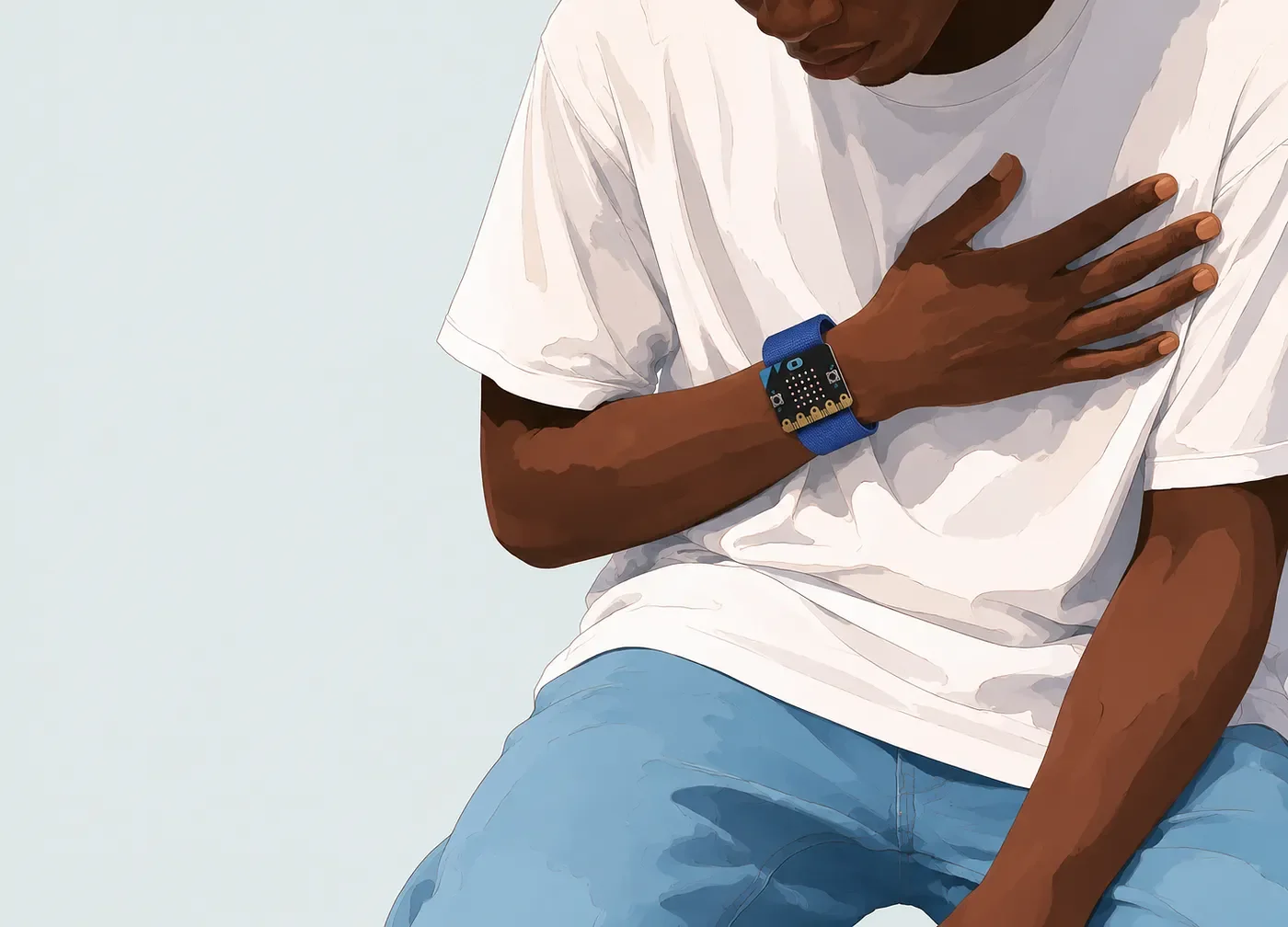
Pattin’ Juba while wearing a micro:bit and generative AI wristband.
Techno-vernacular creativity or TVC is the primary lens through which I engage with technology, from scholarship and research, to teaching and learning and making things. The term I coined is interdisciplinary and culturally sustaining. Although I’m mostly known for the AI-generated and AI-assisted imagery I share on social media, I have been working with colleagues at Lesley University on ways to teach youth how to create using emerging technology, through culturally relevant learning experiences. Design educator Lefteris Heretakis writes,
[Nettrice Gaskins] asks us to look again at the places where official education often fails to look: the street, the cypher, the workshop, the kitchen, the repair table, the barbershop, the mural wall, the quilt, the sound system, the lowrider, the powwow, the family archive, the community ritual, the improvised object, the handmade solution.
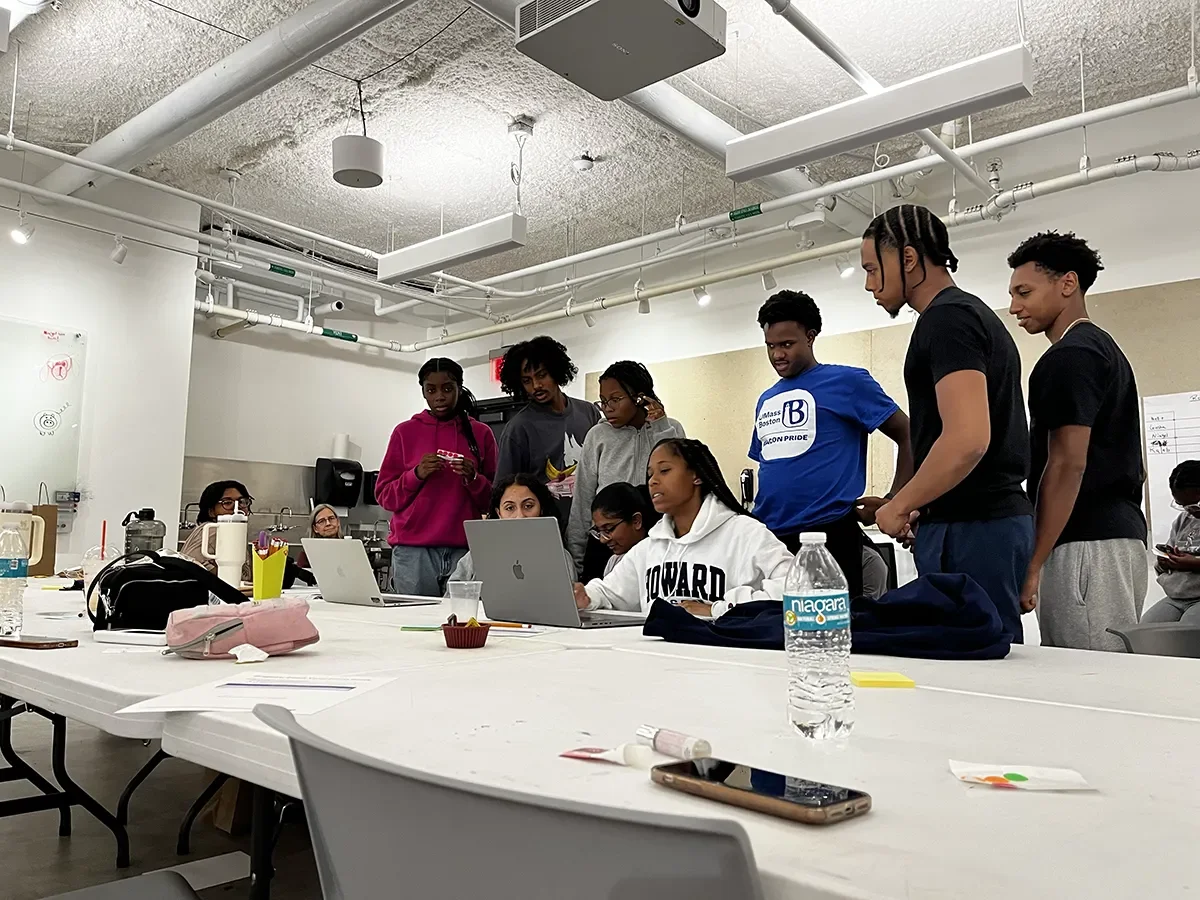
Creative AI & Design “prompt battle” at Lesley University.
The “techno” in TVC casts a broader net to include “algorhythms”: artifacts, patterns, rhythms, gestures, materials, bodies, interfaces, sequences, memories and methods. The creativity part is the artistic and cultural expression, which brings me to Pattin’ Juba or Juba, a Black American music and dance tradition where enslaved people used their bodies — slapping their hands, legs, chest, and cheeks — to make complex rhythms and keep time for dancing. It is also known as Hambone. You can see the influence of Juba in tap dancing, blues music, breakdancingand beatboxing, among other physical (bodily) expressions and performances.
We can also center Juba (Hambone) in the generative AI space, through physical computing, a design approach that combines software and hardware to build interactive systems that sense and react to the physical world. Last May, the Association for Computing Machinery or ACM interviewed researcher Yasmin Kafai who talked about developing lesson plans to explore the use of AI auditing in high school classrooms. AI auditing refers to an approach to interrogate AI systems. Kafai says,
By just systematically investigating or auditing different inputs, you can see what kind of output the system generates, and then with some simple statistics you can make a judgment call: is this biased or not?
Culturally sustaining computing was in the back of my mind when I wrote “The Blues Algorithm: Polyrhythmic Structures in Art & Making” that is featured in the book Feminist Making, Doing & Sensing (2026). This is what gave me the inspiration to combine Pattin’ Juba with AI auditing.
The essay explores the prevalence of polyrhythmic structures in sound and performance-based work, visual art, and crafts, as well as the relationship between these works and algorithms, which refers to sets of rules that, if followed, give performers and creators prescribed results.
The backbeats have algorithmic patterns and rules. The beat is the pulse of a measure, where a performer may nod their head, tap their foot, clap their hands, or perform the ‘Pattin’ Juba’ or hambone, which involves stomping as well as slapping and patting the arms, legs, chest, and cheeks.
I’m working on a new project and Instructable (linked here) that starts with a brief history of Pattin’ Juba and introduces AI auditing through the use of micro:bits and CreateAI, which helps users explore AI through movement and machine learning (ML). The software is used to train an AI model on movement data and run it on the micro:bit. Users collect their own movement data to train, test and improve a machine learning model to recognize different movements. Then, they program their micro:bit using the software to do things in response to their movements.
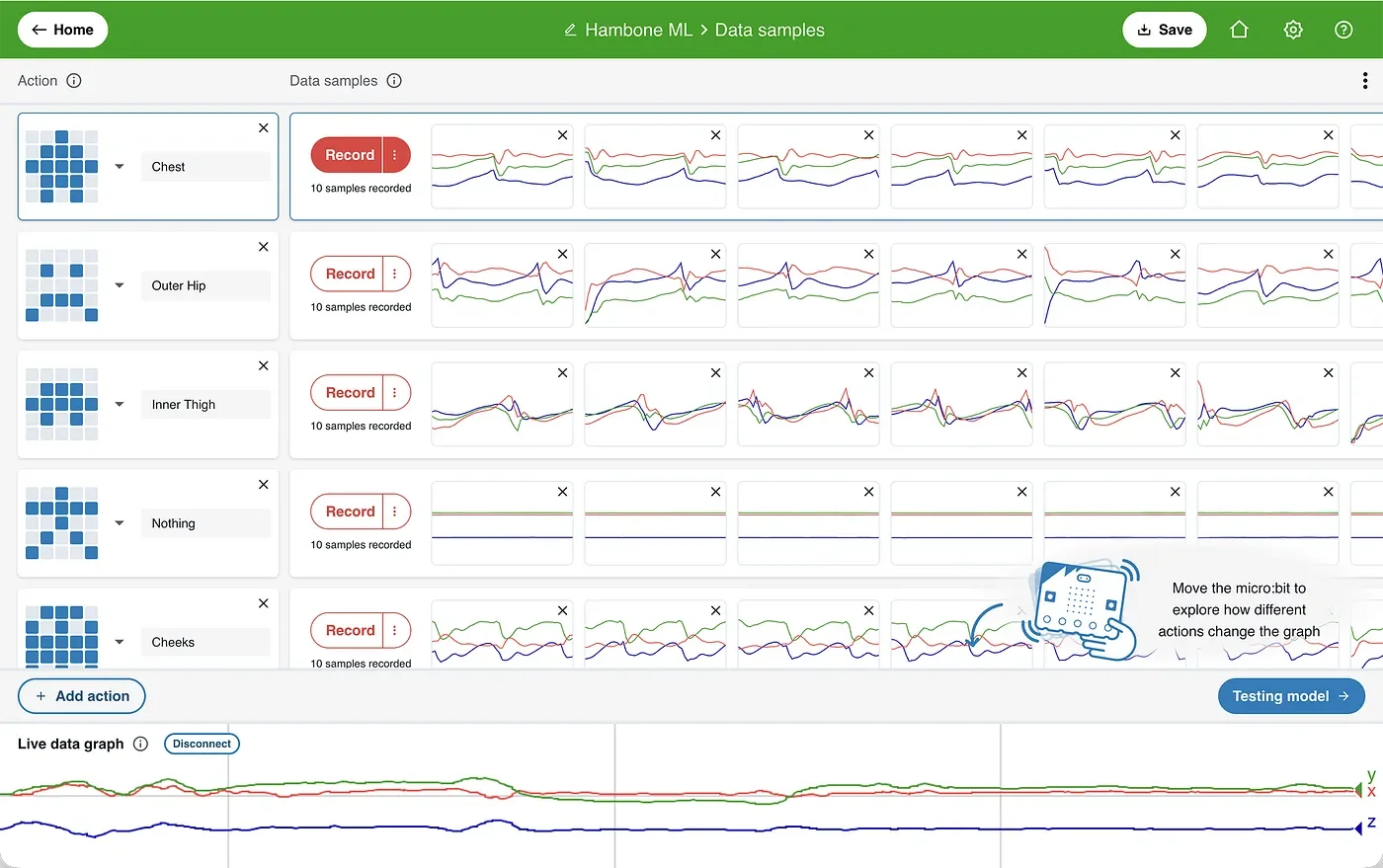
Use CreateAI to record movement as data samples.
I really like the ‘live data graph’ feature that plays the performance of the micro:bit that is worn on the wrist. I created and performed actions that are done through hambone such as patting the chest. I had to record myself doing those actions and the software saved the performances (as data). Next, you can test the model to see if the output is correct.
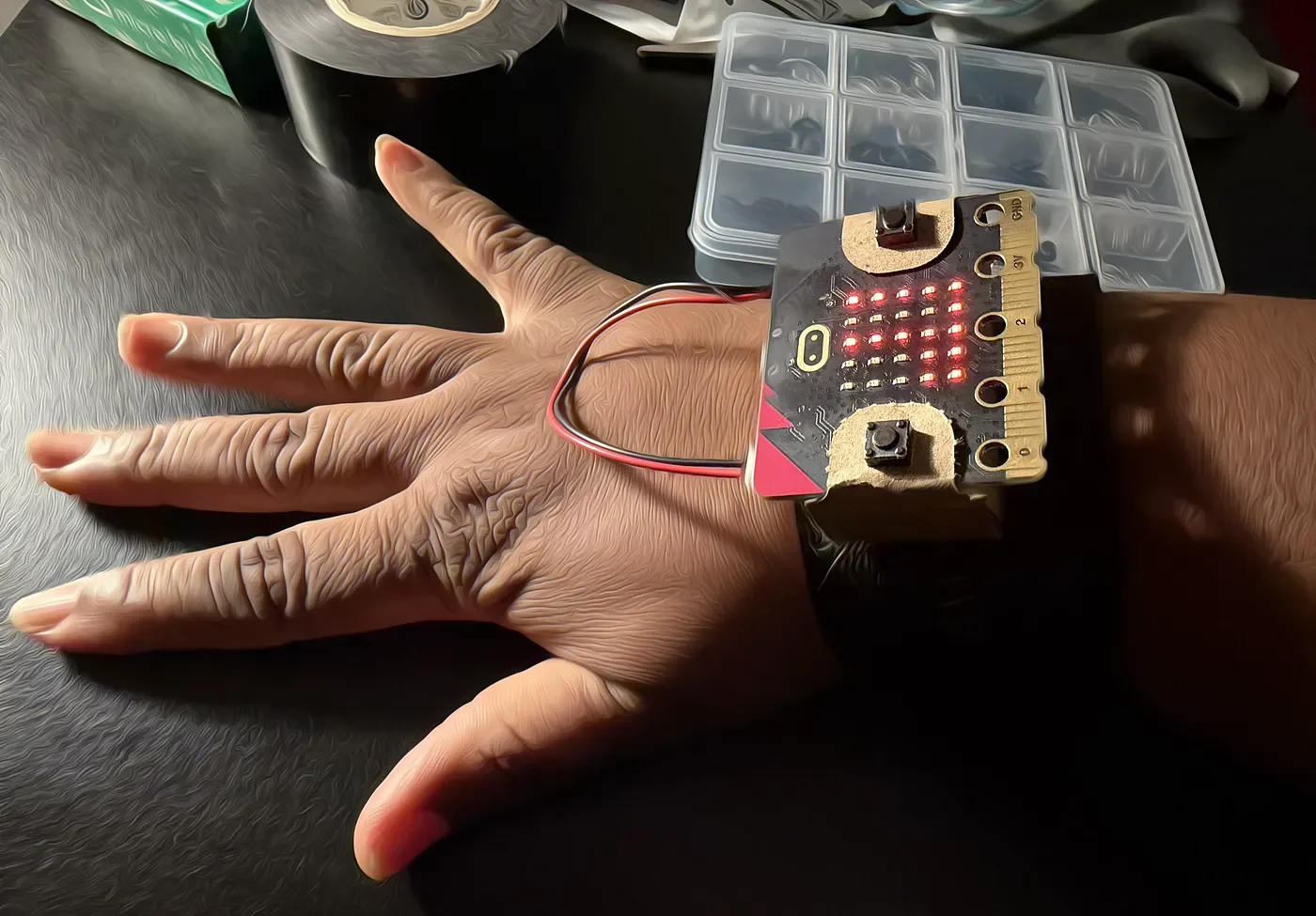
Wearing my micro:bit wristband to test the machine learning model.
These are not side activities. They are not charming examples to be added to the “real” curriculum. They are already design. They are already technology. They are already research. They are already ways of knowing. — Lefteris Heretakis
This is about more than introducing students to software, devices, and artificial intelligence and machine learning (AI/ML) systems. It’s about centering culture and sustaining it through the use of generative AI. The interrogation of the algorithmic and making processes can interrogate bias, an issue that should not be overlooked: AI systems pick up stereotypes or bad patterns dynamically from user feedback over time. Students should end their engagements with generative AI with a sense of agency, not feeling excluded or fearful. Referencing sociocultural practices invites students to engage with AI in an iterative process of AI auditing.
Thanks again to Dr. Gaskins for inviting us to share and promote this new work. Again, please CLICK HERE to read the full original piece with images.