Step 4: Curating & Hosting
Community & Connection
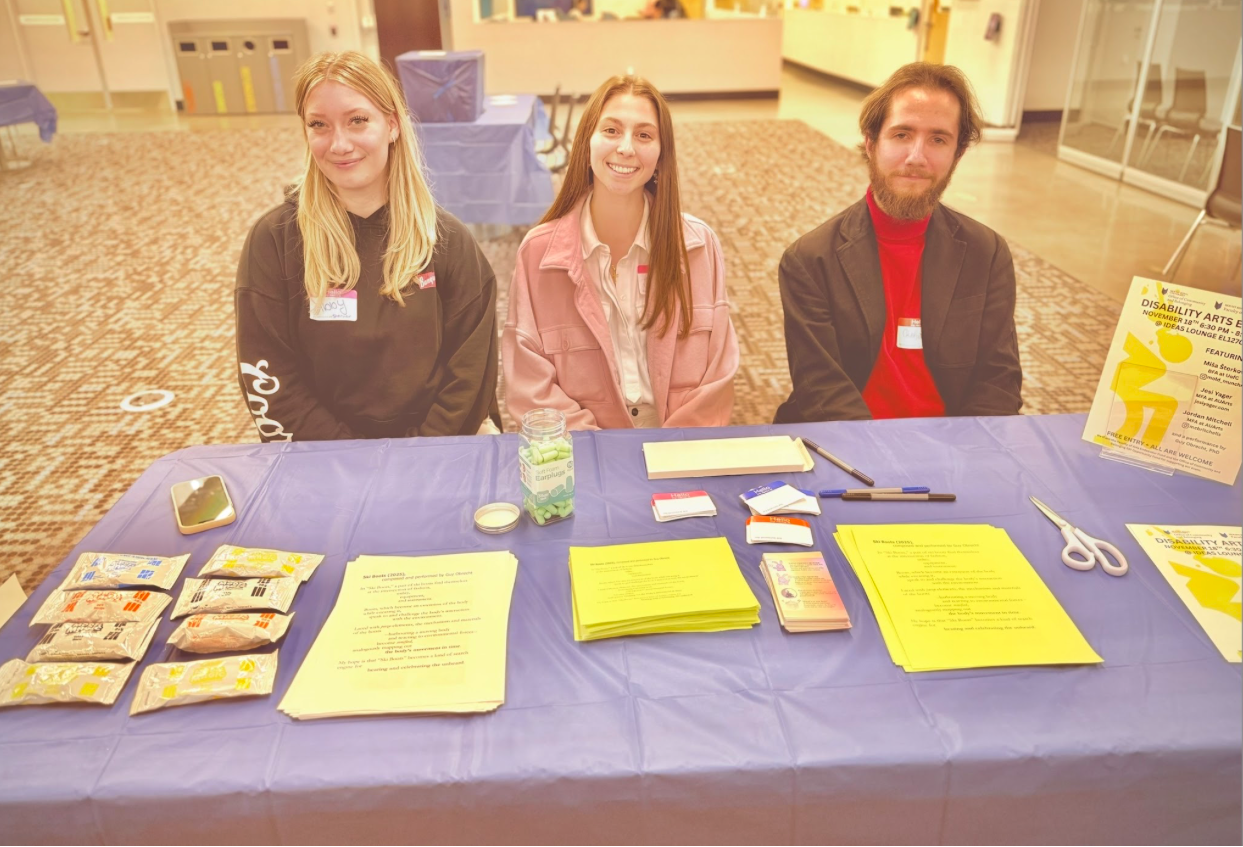
This is a joyful stage in this project, since it involves acting out the plans that the small groups have devised. It’s important to find ways to connect with each other, as small groups set out accessibility guides, curate the artwork (this might be a responsibility of the instructor), and turn a space into a Pop-Up Event.
Part of the experience, akin to the DIY making of trauma kits, involves learning from how our bodyminds respond to the sensorial, relational, and pragmatic aspects of the roles.
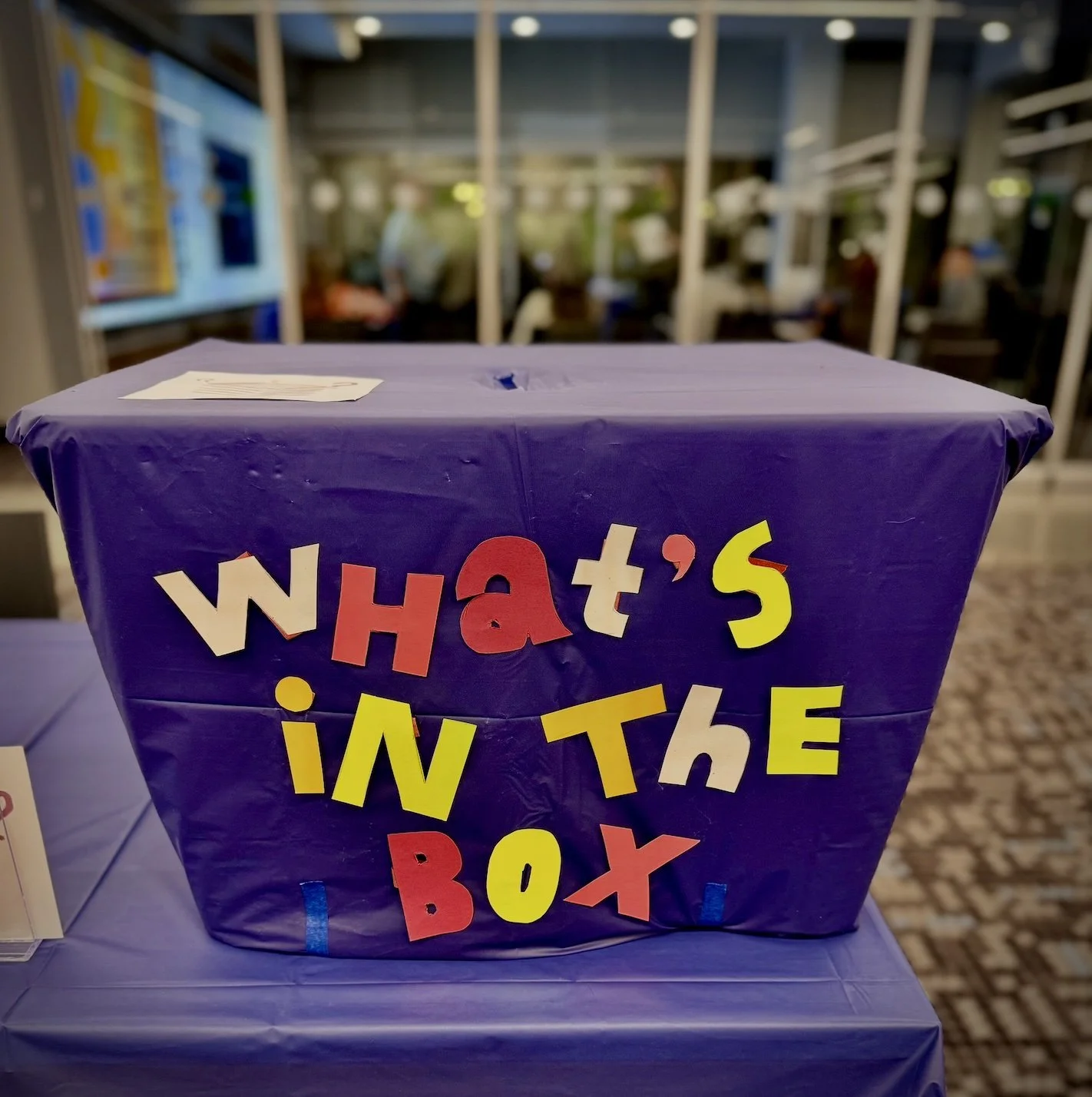
Playing host, for example, can turn out to be deeply enjoyable for some co-creators. Devising an activity, like “What’s In the Box,” can likewise surprise its co-creator by the joy and creativity it brings forth.
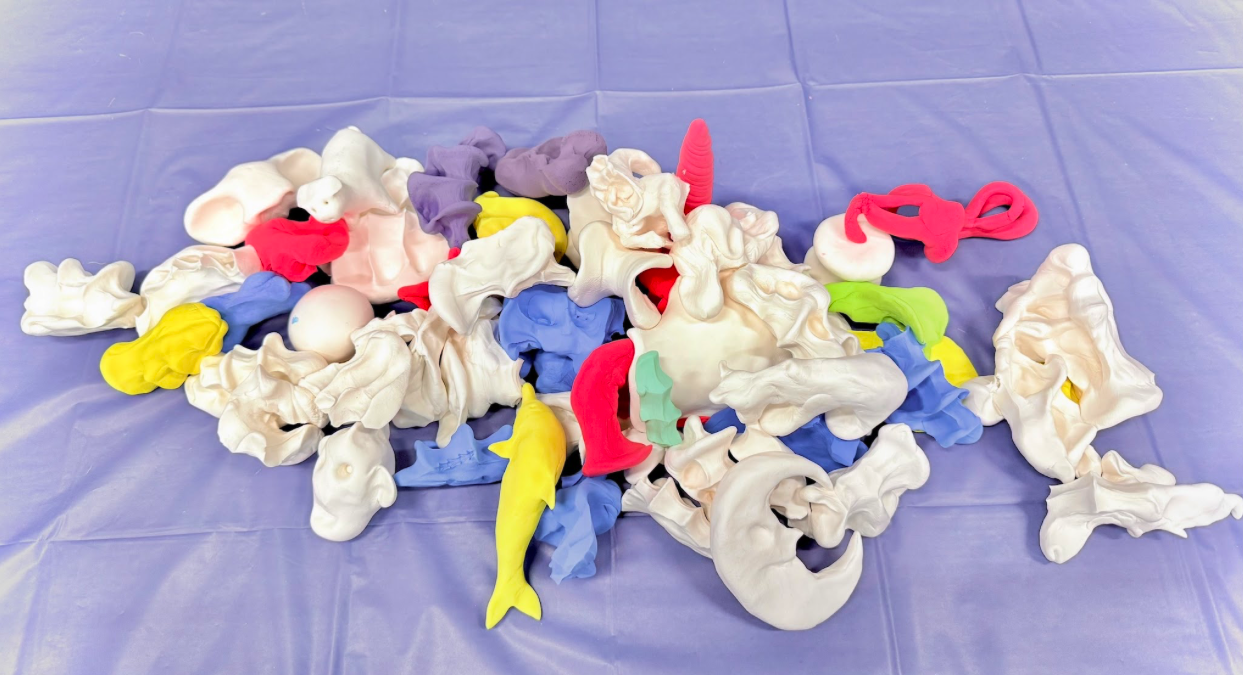
The fall 2025 Disability Arts pop-up included an interactive exercise that culminated in the co-creation of a sculpture, seen here.
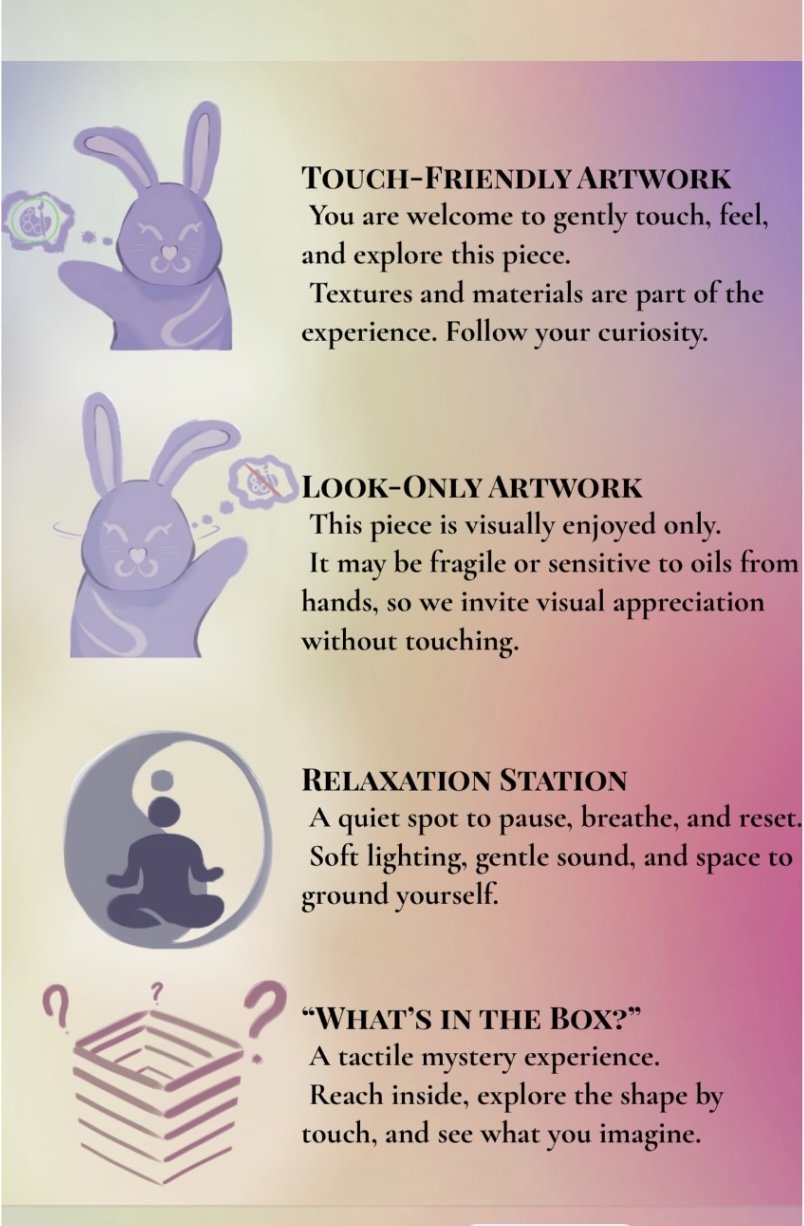
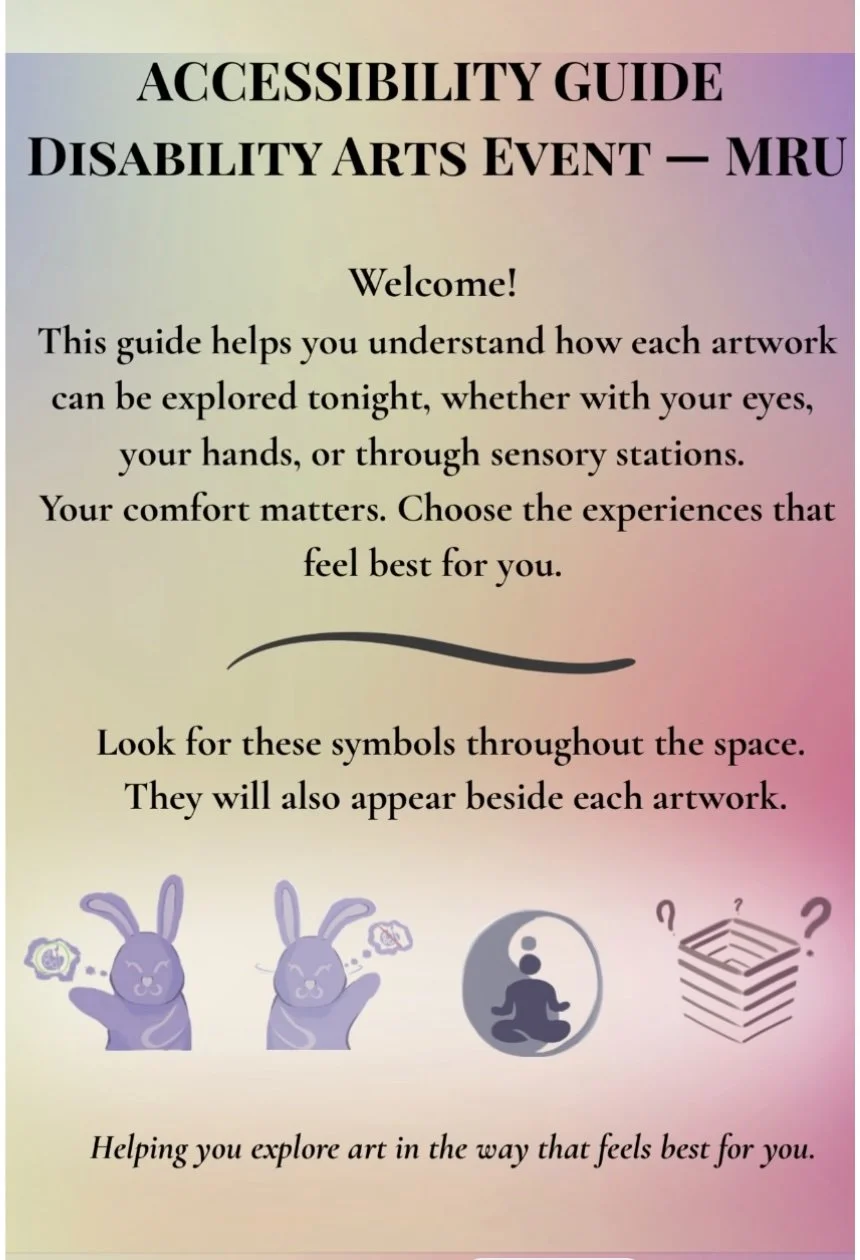
An Accessibility Guide, designed by student co-creators, helped to facilitate multi-sensory experiences at the pop-up.