Step 3: Planning Together
In Depth
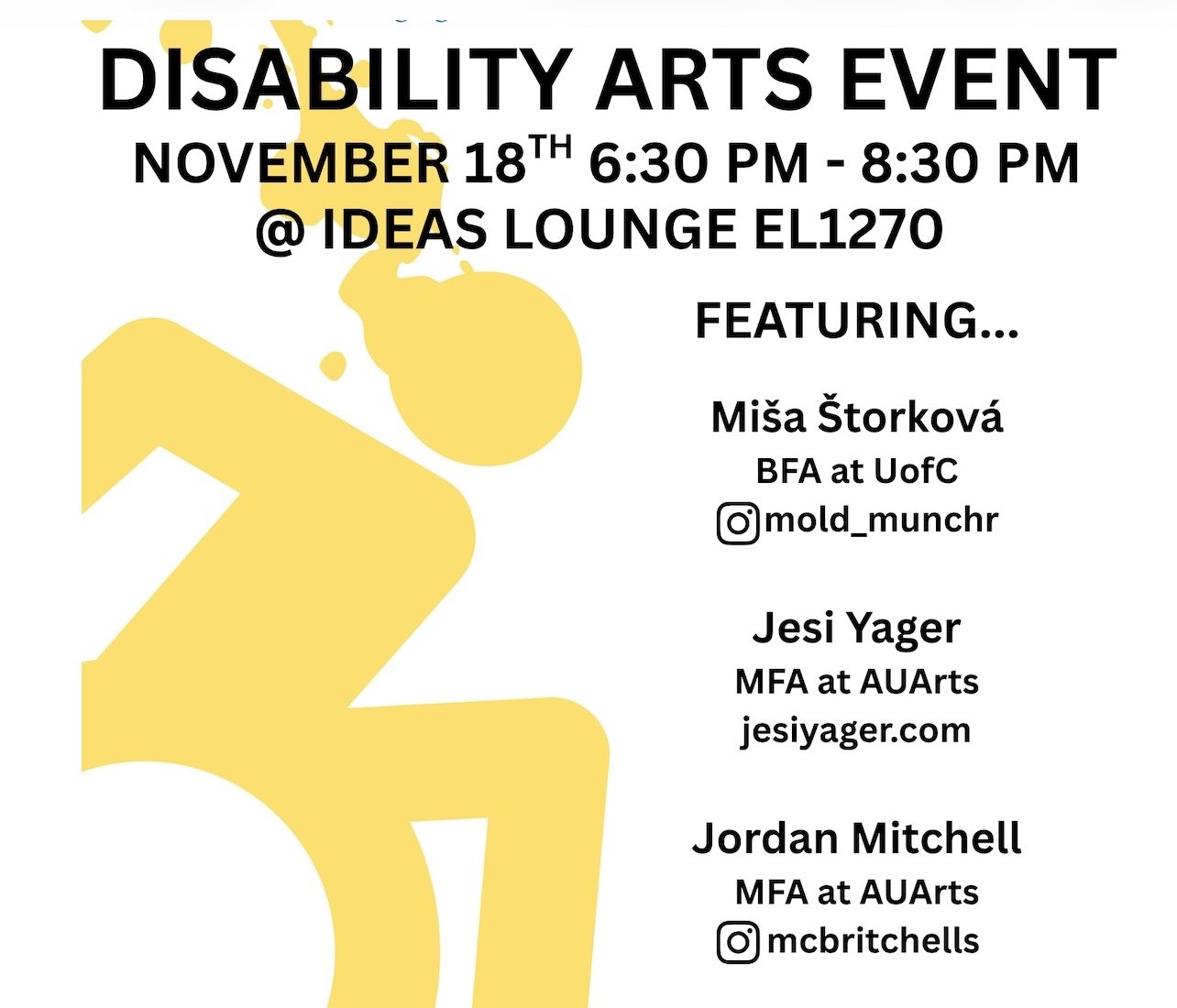
This poster is created by Eli Buechler (a participant in the fall 2025 pop-up and one of the four student creators of this guide).
The poster features an image from the Accessible Icon project. (We learned about this resource by studying Sara Hendren’s work on accessible design in Ada Jaarsma’s Philosophy & Critical Health Studies).
Step Three turns from close reading and a DIY trauma kit exercise to the collaborative planning of a pop-up event. This event might be big (with invitations sent to family, friends, community members, students, and faculty); it might be small (held just for the class and special invited attendees). Here are key ideals for this activity:
that students are the co-creators of the pop-up (the designers, curators, and hosts)
that access guides are important resources for creating an inclusive, accessible pop-up event (see our recommended guides below)
that students choose roles they’re most interested in playing (see our testimonials for reflections on why this is so important)
that philosophy, writ large, enables encounters that can be experienced (as these planning-activities bring to life specific concepts from the assigned reading, like access, access priming, trauma-informed care, feminist and crip commitments, collaborative thinking)
This pop-up assignment takes cues from Mimi Khúc’s’s dear elia: Letters From the Asian American Abyss,published by Duke University Press in 2024. The book dear elia includes a range of examples of collaborative, student-led and student-participatory assignments and experiences in “community curation” (dear elia, 10).
These include an example that the student-researchers who created this guide found especially compelling: the Student Tarot card, described in dear elia as being authored by “students everywhere”.
As a way into feeling part of community, we suggest reading this Student Tarot card aloud, and then inviting each co-creator of the pop-up to choose a phrase to reread aloud, riff on, or resist, in ways that are speaking to them in the moment.

Big Decisions, Beginning planning together
-
is it important, likewise, to secure resources that will allow for catering, for acquiring materials for the interactive activities that students will likely be proposing, and so on? It’s excellent to cast a wide net in considering who might support this event: is there a Teaching Learning centre, an Office of Inclusion, research or teaching grants, or other institutions that might enjoy collaborating?
-
what is the best space to reserve for holding the pop-up event? Since access and access priming are part of the conceptual repertoire that students are exploring, it’s important to choose a space where there is openness and commitment towards providing access and inclusion in a real range of ways.
-
What began as a passion project has evolved into something more. We’re proud of where we’ve been and even more excited for what’s ahead. What sets us apart isn’t just our process—it’s the intention behind it. We take time to understand, explore, and create with purpose at every turn.
Creating Groups
It’s an excellent idea to let the class decide on key roles for the event, which will also mean creating small work groups, as a way to get the “planning, together” underway. Let’s remember that trust is an essential part of access priming, as Margaret Price’s essay explains. It’s also a key touchstone in dear elia, in the form of presuming that someone else has faith in us: “Sometimes you have to have faith in others’ faith in you” (dear elia, 8). These small groups hold the real potential for summoning and deepening trust and faith, among and between the students.