Activity:
How to Make a Pop-Up
Guide Introduction
This is a guide for how to create a student-led pop-up event. As an activity, this project extends the insights of two chapters in Feminist Making, Doing, and Sensing:
Alyson Patsavas’s “How to Make a Trauma Kit”
Margaret Price’s “Access Priming”
In addition, this activity draws on two recommended texts (see Step 1 Close Reading):
Mimi Khúc’s dear elia: Letters From the Asian American Abyss,published by Duke University Press in 2024
Rob Macaisa Colgate’s Hardly Creatures,published by Tin House Books in 2025.
This guide connects the readings with a set of activities (our To-Do Steps). Reflections by students expand on and explore the significance of the activities (our Testimonials).
It’s designed in part for instructors who might enjoy the creative assignment that this guide is laying out: namely, a semester-long experiential project that culminates in a Disability Arts/Philosophy pop-up event. Elements of this assignment will work well in any humanities class (composition, English literature, philosophy, history, creative writing, and so on).
This guide is also designed for readers of Feminist Making, Doing, and Sensing who are interested in taking up prompts and ideas from the book: for example, Alyson Patsavas’s invitation to make a trauma kit.
Here is a stand-alone set of queries for how to make a trauma kit, drawn from Aly’s chapter.
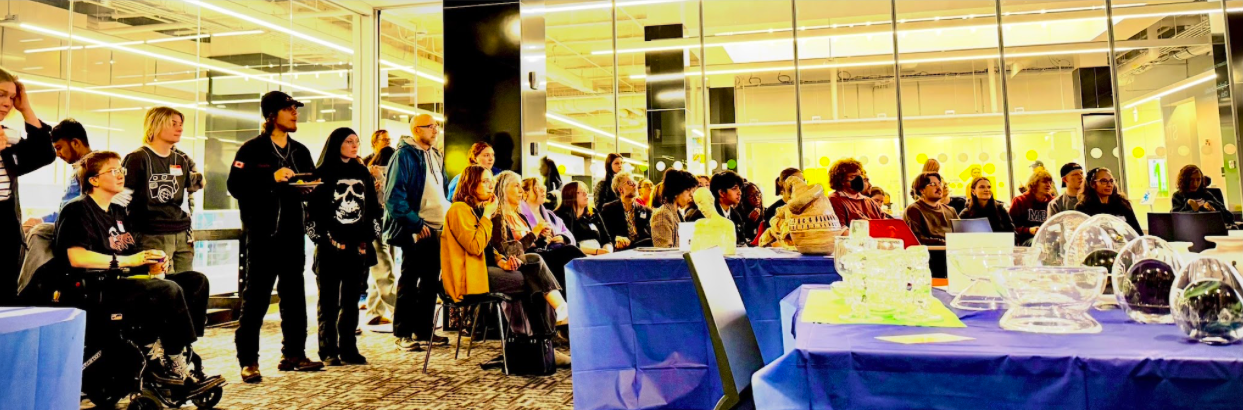
This guide was created by four student-researchers and Ada Jaarsma (see About Us). These students were co-creators of the Disability Arts Pop-Up event that was held at the Mount Royal University Library in fall 2025.
This guide draws on student first-hand experiences and reflections, as well as the course in which this event was embedded: Ada Jaarsma’s Philosophy & Critical Health Studies at Mount Royal University (Treaty 7 Territory, Calgary, Canada).
As Chloe Regan, one of the student researchers, explains, this pop-up assignment turns “collaboration, creativity, and care into things not only to discuss in theory but also to actively practice.”
Contents
Step 1: Close Reading
This project begins with a close reading of two chapters: Alyson Patsavas’s “How to Make a Trauma Kit” and Margaret Price’s “Access Priming” (from Feminist Making, Doing, and Sensing: Experiments in Philosophy).
Additional recommended readings are the opening chapter to Mimi Khúc’s dear elia: Letters From the Asian American Abyss (Duke University Press, 2024) and Rob Macaisa Colgate’s Hardly Creatures (Tin House Books, 2025).
These texts explore and uphold values (ideals, principles, design practices) that extend directly into this pop-up activity. The forms and styles, as well as the content, provide an essential first step.
The philosophies that might be at play in the background here are so wide-ranging! This means that this activity can suit a whole variety of courses, themes, and contexts, including: philosophy of disability; existentialism; political and social theory; aesthetics; critical theory; even bioethics (understood through the framework of crip studies and critical disability studies).
This activity, in other words, is anchored in a set of readings and at the same time can speak to an expansive reach of the discipline of philosophy; it would also work well in courses from across the humanities, especially ones that focus on creative and collaborative thinking, writing, and making.

Step 2: Make a Trauma kit
This step takes cues from Alyson Patsavas’s five-step guide to creating a trauma kit that, in Aly’s words, “curates objects to comfort, soothe, and ground their users in moments of distress” (“How to Make a Trauma Kit,” 65). These five steps for making a trauma kit, Aly explains, are invitational rather than prescriptive: we are encouraged to follow these steps in reflective and creative ways.
Each step holds potential for prompting and generating insights, especially in relation to making and knowing.
This exercise, “Make a Trauma Kit,” might be expanded to include first-person writing, conversations, and engaging more crip and feminist, trauma-informed projects.
Conversations might open, in wonderful ways, by also engaging with Open in Emergency, the open-access collaborative special issue (published by the Asian American Literary Review and led by Mimi Khúc) that features more creative “making” activities (a hacked DSM, a Tarot deck, and so on).

Step 3: planning Together
This collaborative project hinges, in key ways, on planning the pop-up together. Here are some experiences to facilitate:
to make groups, organized around activities that students/ co-creators decide are priorities and that they’d like to focus on;
to agree on a doable timeline;
to get excited about the ethos of the plans (getting excited about how to create an accessible, inclusive space, for example, is part of this project: this is a kind of priming for the event itself).
As the students’ testimonials suggest, this step is where a lot of the meaning happens: the freedom of choosing roles and tasks, for example, ends up translating into the joy of making the pop-up.
Planning involves a balance between decisions that the instructor/facilitator decides (whose art will be featured at the pop-up? Are there institutional funds that can help to support this event?) and the array of choices and priorities that students decide. (We could say that there’s an immanence to this pop-up project, and part of its significance emerges out of the discovery of what matters to each co-creator).

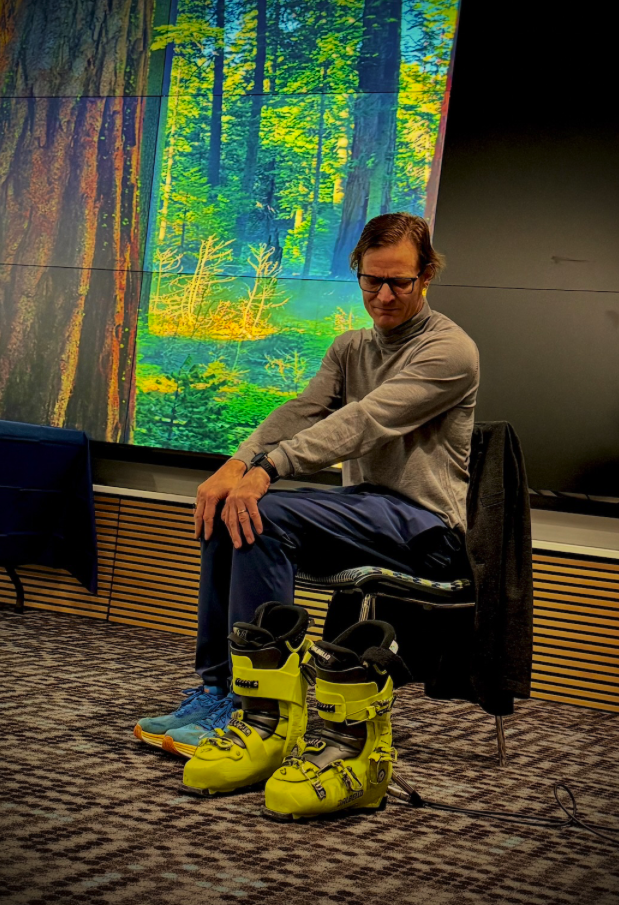
Guy Obrecht, sound artist and composer, performed an original piece, “Ski Boots,” at the 2025 Pop-Up held at Mount Royal University.
Step 4: Curating & Hosting
A pop-up event takes place in real time, and as a one-time gathering, it allows for a whole range of things to take place.
Students experience what it’s like to inhabit the roles that they’ve chosen: playing host, speaking during the event, facilitating interactive activities, taking photos and compiling artifacts of the happenings.
The atmosphere of the pop-up will, in part, be part its surprise. In addition, many aspects will be delightful to experience, note, and track: the aesthetics, the messaging, the art and the artists, interactions with the folks who accept the invitation to attend. It’ll be lovely to consider what feedback loops the co-creators might enjoy learning from, after the event is over: participants might be invited to fill out notecards, for example, or create a sculpture (as in the case of the 2025 pop-up event).
Step 5: Reflecting
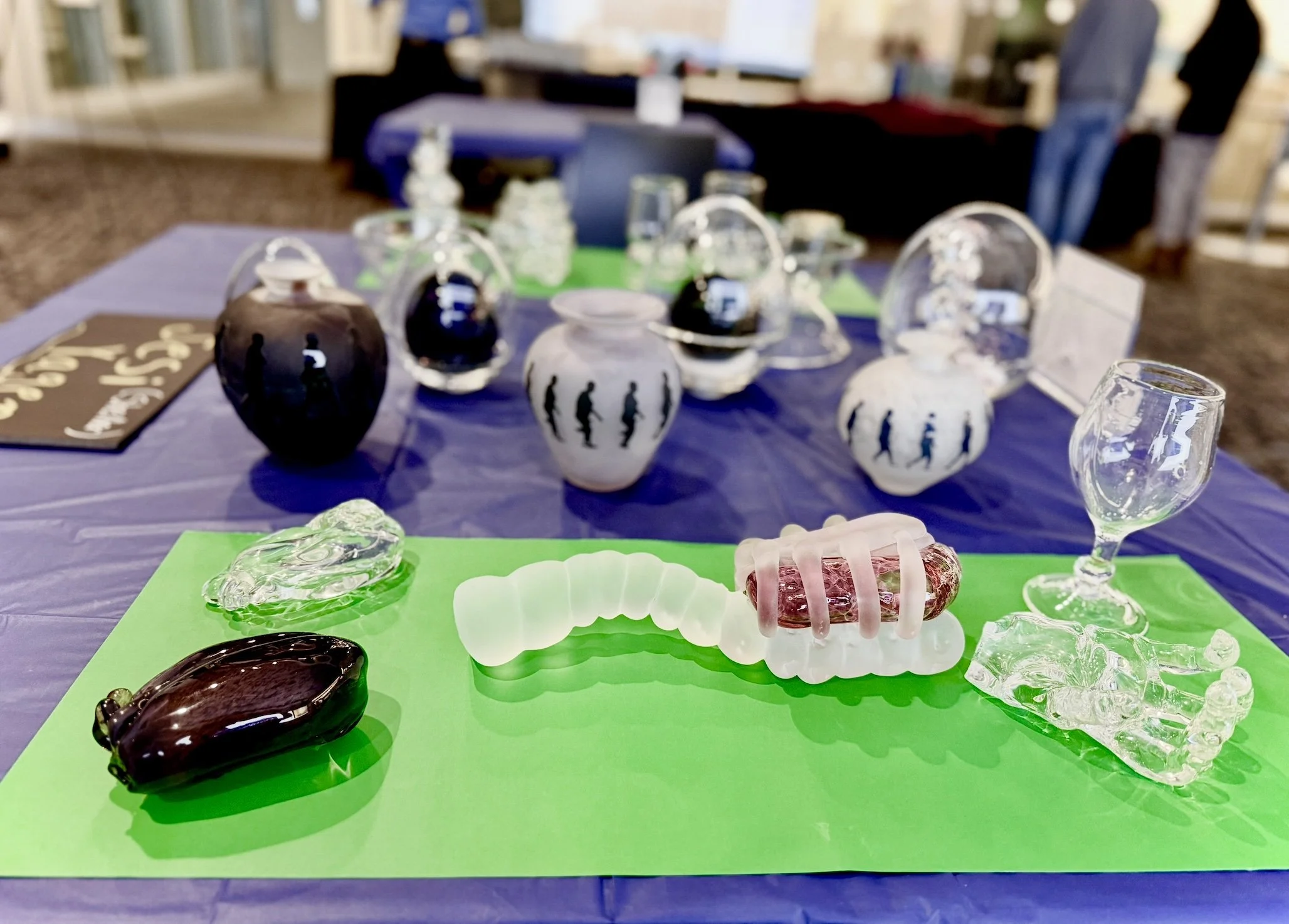
Sculptures by Jesi Yager, MFA, one of the artists showcased at the 2025 Pop-Up held at Mount Royal University.
This project culminates in reflection. The student testimonials speak directly to the significance of this final step.
Like earlier steps, this can take more or less time, and can consist of more or less in depth prompts and facilitation. It’s an excellent idea to approach this activity of reflecting as both collaborative and solo, given the degree to which this assignment is a deeply shared, collaborative project.